



New Zealand elects Christopher Luxon as Prime Minister
- In Reports
- 10:40 PM, Oct 14, 2023
- Myind Staff
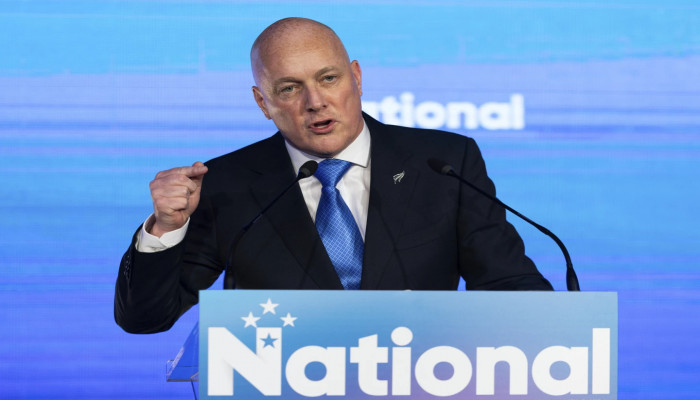
Conservative former businessman Christopher Luxon of the National Party will be New Zealand’s next prime minister after winning a decisive election victory on Saturday. After six years of a liberal administration, most of which was presided over by Jacinda Ardern, the citizens of New Zealand decided to vote for change.
Addressing a euphoric crowd at his party’s victory event on Auckland’s waterfront, Mr Luxon thanked supporters and promised a better and more stable future for the country.
“You have reached for hope and you have voted for change,” he said.
“Our government will deliver for every New Zealander,” he said, to whoops and cheers. “We will rebuild the economy and deliver tax relief.”
Chris Hipkins, who took over as prime minister from Ardern in January but held the position for only nine months, informed supporters late Saturday that he had called Luxon to concede.
Hipkins said it wasn’t the result he wanted.
Many voters felt that Ms Ardern and her successor, Chris Hipkins, fell short of the revolutionary shift that the Labour Party had promised. The expense of living was widely cited by New Zealanders as the main issue influencing their vote in the weeks preceding the election. They were affected by the currents of worldwide inflation and the economic difficulties of their larger Asia Pacific neighbours.
When most of the votes had been tallied, Luxon's National Party had received around 40% of them. Under New Zealand’s proportional voting system, Luxon, 53, is expected to form an alliance with the libertarian ACT Party.
Hipkins' Labour Party was only receiving little more than 25% of the vote, which is less than half of what it received in the previous election under Ardern.
New Zealand, which switched to a proportional representation system in 1993, has only had one single-party government, the Labour administration led by Ms Ardern, which was elected in 2020. The alliance represents a return to form for the country. But it is the first time that National, which last ruled alone in the early 1980s, has been in coalition with a more conservative partner.
The question had been whether it would need one or two coalition partners.
"On current numbers, it looks like National and ACT will be in a position to form the next government," Mr Luxon said.
That would mean the country would avoid the National-ACT-NZ First three-party coalition scenario, which would mean lengthy negotiations.
There is still a chance Mr Luxon will have to reach out to NZ First leader Winston Peters to hold a clear majority in the chamber.
The National Party had campaigned on a platform of tax cuts, saying it would offer relief to middle-income families. Hipkins had promised free dental care for people younger than 30 and the removal of sales taxes on fruit and vegetables.
According to the most recent government data, inflation, which was 6.7% in July compared to 6.7% a year earlier, appears to be slowing down. However, New Zealanders will likely continue to experience hardship as the nation deals with high house and rent prices, a high cost of borrowing, and the effects of global shocks.
The relationship between the government and Indigenous Mori is also an issue in this election. He has vowed that the Mori Health Authority, which Luxon claims divides the health system into two, will be abolished. Hipkins has accused Luxon of supporting racism and stated that he is proud of such efforts at co-governance.
Hipkins was faced with a dilemma shortly after taking over in January after terrible floods and then a hurricane struck New Zealand. He swiftly abandoned some of Ardern's most divisive ideas and pledged to take a "back to basics" strategy aimed at addressing the skyrocketing cost of living.
Political experts claim that despite Luxon's relative inexperience in politics, he competed well with Hipkins during televised debates.
Image source: AP



 Loading...please wait
Comments