



China successfully deploys reusable Robotic spacecraft for the third time since 2020
- In Reports
- 07:06 PM, Dec 16, 2023
- Myind Staff
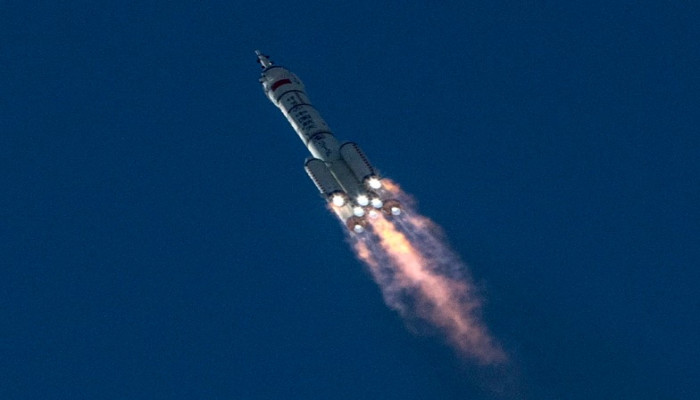
China has achieved its third successful launch of a reusable robotic spacecraft since 2020, marking a milestone in its series of secretive orbital test flights. The uncrewed spacecraft propelled by a Long March 2F rocket—the same series employed for transporting astronauts—was launched from the Jiuquan Satellite Launch Center in northwest China. This initiative is part of China's strategic efforts to develop and implement reusable technologies to significantly reduce the costs associated with space missions.
According to state media, the spacecraft is slated to conduct operations in orbit for an unspecified duration before making its return to a designated landing site in China. Throughout its flight, the spacecraft will validate reusable technologies and perform space experiments, with no additional details provided.
The most recent launch of the spacecraft occurred in August 2022, concluding with its return to Earth after a 276-day orbit. However, specific information regarding the tested technologies, the altitude reached, or any visual representation of the spacecraft remains undisclosed to the public.
China's initiative to develop a reusable spacecraft, often referred to as Shenlong or "Divine Dragon" in Chinese, aligns with a parallel and equally clandestine program in the United States, involving the deployment of an autonomous spaceplane known as the X-37B.
The Chinese launch occurred shortly after SpaceX postponed the countdown for a new launch of the X-37B for the third time within the week. The delays were attributed to adverse weather conditions and technical issues at NASA's Kennedy Space Center in Florida.
The launch date for the X-37B's seventh mission, carried by a SpaceX Falcon Heavy rocket, remains undisclosed. The U.S. Space Force oversees this secretive mission under the National Security Space Launch program. General B. Chance Saltzman anticipates China's Shenlong spacecraft launching concurrently, intensifying the space rivalry.
Boeing's X-37B, resembling a miniature space shuttle, conducts various experiments during extended orbital flights. In its last mission, it spent over 900 days in orbit. China achieved its inaugural launch of a reusable spacecraft in September 2020 with a two-day orbital flight. The development of reusable spacecraft is considered crucial for advancing the goals of increasing the frequency of spaceflight and reducing per-mission costs.
Image source: The Economic Times



 Loading...please wait
Comments